


The Melting Mountain: Why a Himalayan Peak Collapsed

Sept 17, 2026
Seoyoung kang
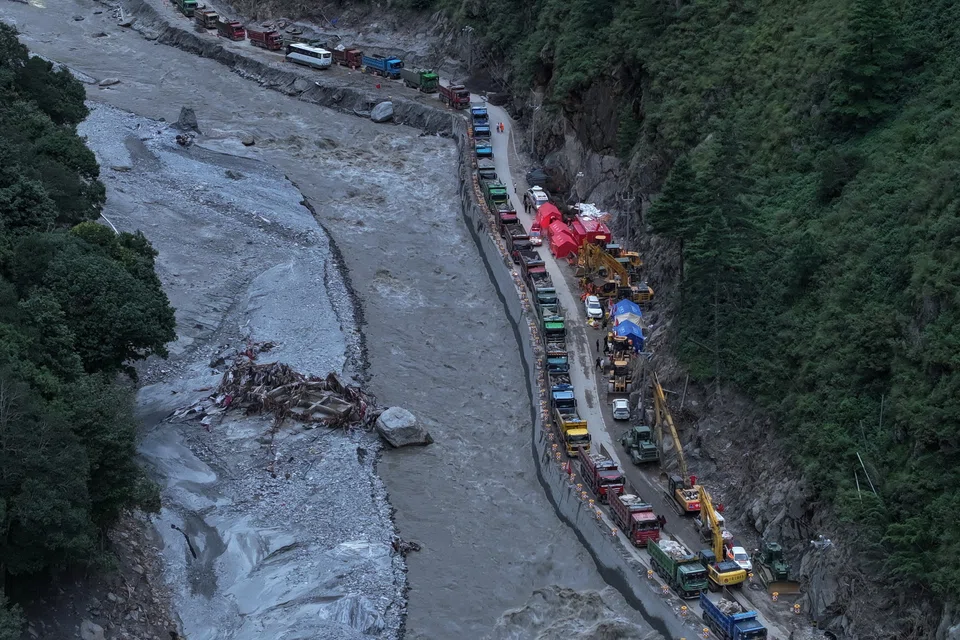
On August 26, 2026, a massive disaster happened near Langtang Lirung in the Himalayas, right along the border between Nepal and China's Tibet region, where an entire section of the mountain collapsed. According to a report by the Nepal Environmental Society, the devastating flood and landslide started when glaciers and bedrock near an elevation of 5,200 meters crumbled, speeding 1,200 meters down the slope at a speed of 167 km/h.
A debris flow is a geological disaster where mud, rocks, and sand mix with water, usually triggered by heavy downpours or typhoons, and rush down valleys and riverbeds at terrifying speeds. While this extreme collapse was initially suspected to be caused by too much flooding or an earthquake, satellites revealed a different story. It was a huge disaster, triggered when giant high-altitude glaciers and bedrock weakened by global warming finally collapsed.
The cause of this collapse was the destruction of the natural ice cement holding the mountain together from the inside. High-altitude peaks above 5,000 meters might look like solid rock on the surface, but for thousands of years, permafrost, a frozen mix of soil and ice, has filled every crevice, acting like glue to hold the entire structure intact. However, rising temperatures from global warming caused this ice cement to melt. The meltwater went deep into the rocky fractures, building up immense water pressure that pushed the rocks outward. As this water froze and melted repeatedly, it widened the cracks even further. Unable to bear the pressure any longer, the high-altitude glacier and bedrock broke away all at once.
Experts warn that the Langtang Lirung collapse is just the beginning. If global warming continues at its current pace or much faster, the ice cement resting in high-altitude mountains worldwide will melt one by one, triggering even larger catastrophes. This collapse in the Himalayas is a warning sign the world cannot afford to ignore and must address.


